How the 50/30/20 rule works
Take your monthly take-home pay and split it into three buckets. Half goes to needs, the bills you would have to pay even in a tight month. Thirty percent goes to wants. Twenty percent goes to savings and extra debt payments. On $4,600 a month that is $2,300, $1,380 and $920.
- Needs: rent or mortgage, utilities, groceries, insurance, getting to work, minimum payments on debt, childcare.
- Wants: eating out, streaming, shopping, hobbies, travel, upgrades you could live without.
- Savings and debt: emergency fund, retirement, savings goals, and anything you pay on debt above the minimum.
When your needs are over 50%
In the example above, needs take 68% of pay. That is normal where rent is high, and it does not mean the budget is broken. The 50/30/20 rule is a starting point. Take the gap out of wants first, keep something going to savings every month, and look at the one or two biggest fixed bills. Many people end up on 60/20/20 or 70/20/10, and that is fine if the money is planned.
From three buckets to a real budget
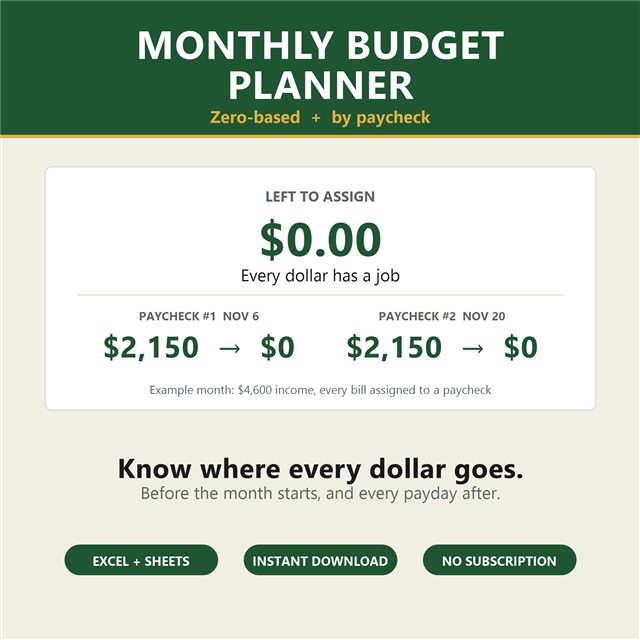
The split shows where your money goes. A zero-based budget goes one step further: every dollar of income gets a line, until nothing is left unassigned. Assigning each bill to the paycheck that pays it keeps you from coming up short between paydays.
Frequently asked questions
What is the 50/30/20 budget rule?
50% of take-home pay for needs, 30% for wants and 20% for savings and extra debt payments.
Is it based on gross or net income?
Take-home (net) pay. If retirement comes out before your paycheck, you can add it back to income and to savings.
What if my needs are more than 50%?
Common where rent is high. Take the difference from wants first and keep at least some savings going.
This is a planning tool, not financial advice. Nothing you enter leaves your browser.