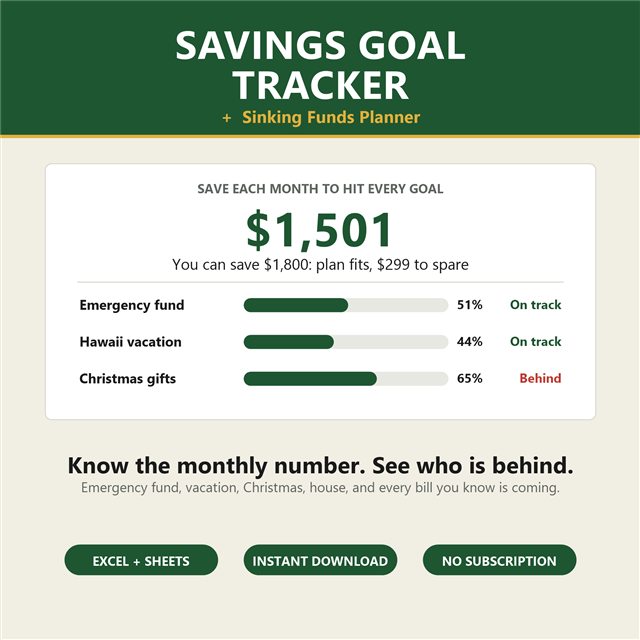
How much to save each month: the simple math
Start with what is left to save: the goal minus what you already have. Divide it by the number of months until your target date. That is your monthly amount with no interest. A $10,000 emergency fund with $2,500 already saved and 14 months to go needs $7,500 ÷ 14 = about $536 a month.
If the money sits in a high-yield savings account, interest does part of the work. At 4% APY the same goal needs about $515 a month, because both the $2,500 you have and every deposit earn interest along the way. Over a short goal the difference is small. Over five years it adds up.
Sinking funds: save for bills you know are coming
Plenty of expenses are not surprises. Christmas comes every December, car insurance renews twice a year, the dentist bills after every visit. A sinking fund turns each of those into a small monthly amount. A $720 car insurance bill due in five months is $144 a month; a $800 holiday budget with two months to go is $400 a month, which is why starting early matters.
When the plan does not fit
Add up the monthly amounts for every goal and compare them with what you can actually save. If it does not fit, you have three levers: push a target date back, lower a target, or save more. The calculator's "At what you can save" table shows how far each month you can afford moves the finish line.
Frequently asked questions
How do I calculate how much to save each month for a goal?
Divide what you still need by the months until your date. With interest, you need a little less, and this calculator works that out for you.
Does interest make a big difference for short savings goals?
For goals under two years it usually changes the monthly amount by a few percent. Over several years it matters more.
What is a sinking fund?
Money set aside each month for a cost you know is coming, so the bill does not land on your credit card.
This is a planning tool, not financial advice. Nothing you enter leaves your browser.