The guideline: 3 to 6 months of essentials
An emergency fund covers the bills you cannot skip if your income stops or a big surprise hits: housing, utilities, groceries, insurance, transport and minimum debt payments. Count those, not your full spending and not your income. Three months is the usual floor; six months is common for single-income households, the self-employed or anyone with irregular pay.
Worked example
Essential costs of $3,120 a month: rent $1,450, utilities and phone $295, groceries $600, car payment, insurance and gas $522, health insurance and minimum debt payments $253.
| Months covered | Target |
|---|---|
| 3 months | $9,360 |
| 4 months | $12,480 |
| 6 months | $18,720 |
How long it takes to build
Starting from $0, saving the same amount every month in an account paying 4% APY:
| Save per month | 3 months ($9,360) | 6 months ($18,720) |
|---|---|---|
| $300 | 30 months | 57 months |
| $500 | 19 months | 36 months |
| $750 | 13 months | 24 months |
Put in your own target, what you have already saved and your target date with the free savings goal calculator. It works out the exact monthly amount, interest included.
Start with a smaller first goal
Six months of expenses can feel out of reach. Many people set a starter goal first, often around $1,000, which covers a car repair or a medical bill without a credit card. At $150 a month that takes about seven months. Then keep the same transfer going toward the full target.
Where to keep it
The point is access, not growth. Most people keep an emergency fund in a separate savings account they can reach in a day or two, often a high-yield savings account, so it earns something without being tied up or at risk. Keeping it apart from checking also makes it less tempting to spend.
Emergency fund vs sinking funds
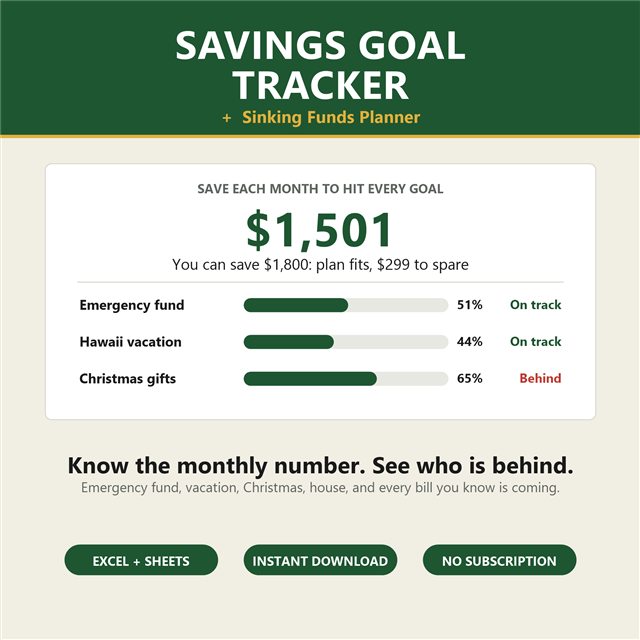
A car insurance bill every six months or Christmas every December is not an emergency; you know it is coming. Save for those in separate sinking funds, so the emergency fund stays for real surprises.
This is general information, not financial advice. The right size depends on your income stability, household and debts.