The short answer
Both methods pay the minimum on every debt and put every extra dollar on one target. When the target is gone, its payment rolls into the next one. Debt snowball targets the smallest balance first. Debt avalanche targets the highest interest rate first. Avalanche never costs more interest; snowball often clears a debt sooner, which keeps people going.
A worked example: six debts, $24,200
| Debt | Balance | APR | Minimum |
|---|---|---|---|
| Credit Card A | $4,850 | 24.99% | $145 |
| Credit Card B | $1,200 | 19.49% | $40 |
| Car Loan | $11,400 | 6.9% | $310 |
| Store Card | $650 | 26.99% | $35 |
| Personal Loan | $5,200 | 11.5% | $180 |
| Medical Bill | $900 | 0% | $50 |
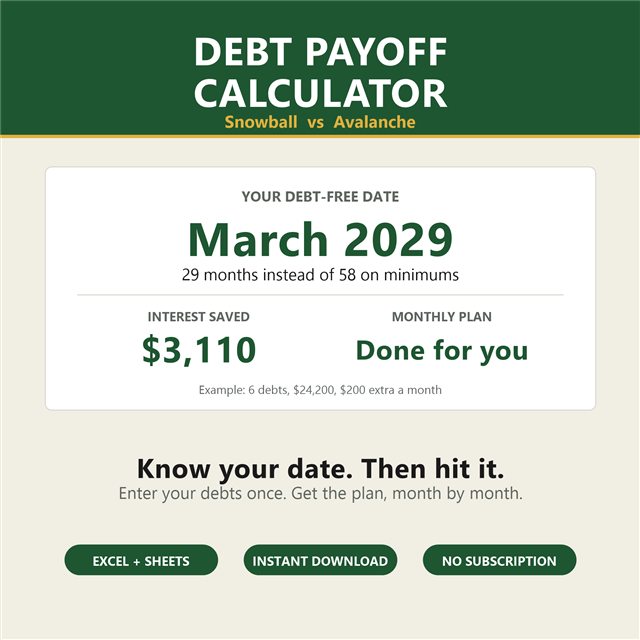
Minimums add up to $760. With $200 extra, the monthly budget is $960, paid every month until the last debt is gone.
| Snowball | Avalanche | Minimums only | |
|---|---|---|---|
| Debt-free in | 29 months | 29 months | 58 months |
| Total interest | $3,637 | $3,452 | $6,561 |
| Interest saved vs minimums | $2,924 | $3,110 | - |
| First debt gone | month 3 | month 3 | month 18 |
Avalanche saves $185 more. Both finish in the same month, half the time of paying minimums.
The payoff order is where they differ
| Order | Snowball (smallest balance) | Avalanche (highest rate) |
|---|---|---|
| 1 | Store Card, paid month 3 | Store Card, paid month 3 |
| 2 | Medical Bill, month 6 | Credit Card A, month 18 |
| 3 | Credit Card B, month 9 | Credit Card B, month 20 |
| 4 | Credit Card A, month 20 | Personal Loan, month 24 |
| 5 | Personal Loan, month 24 | Car Loan, month 29 |
| 6 | Car Loan, month 29 | Medical Bill (0%), on minimums by month 18 |
Snowball closes three accounts in nine months. Avalanche spends that time on the 24.99% card, which is why it costs less. If seeing accounts close is what keeps you paying, snowball's extra $185 can be money well spent.
What moves the date more than the method
Same six debts, avalanche order, different extra payments:
| Extra per month | Debt-free in | Total interest |
|---|---|---|
| $0 (minimums, rolled forward) | 40 months | $5,691 |
| $100 | 34 months | $4,237 |
| $200 | 29 months | $3,452 |
| $300 | 26 months | $2,942 |
| $500 | 22 months | $2,304 |
Look at the first row. Even with no extra money, keeping the total payment fixed and rolling each paid-off minimum into the next debt finishes in 40 months instead of 58. That habit is worth more than the choice of method.
How to choose
- Pick avalanche if your rates are far apart, a high-rate card has a big balance, or you just want the lowest total cost.
- Pick snowball if you have several small balances you can clear in months, or you have started plans before and stopped.
- Either way, check every minimum covers its monthly interest (balance x APR / 12). If it does not, that debt grows on minimums alone.
Put your own debts into the free debt payoff calculator to see both orders side by side with your numbers.