Working weights per cubic yard
| Material | Lbs per cu yd | Tons per cu yd |
|---|---|---|
| Furniture and mattresses | 120 | 0.06 |
| Household junk and boxes | 150 | 0.08 |
| Electronics | 300 | 0.15 |
| Appliances | 350 | 0.18 |
| Yard waste and brush | 350 | 0.18 |
| Wood and lumber | 400 | 0.20 |
| Mixed construction debris | 500 | 0.25 |
| Drywall and plaster | 500 | 0.25 |
| Dirt, soil and sod | 2,000 | 1.00 |
| Tile and stone | 2,000 | 1.00 |
| Roofing shingles | 2,200 | 1.10 |
| Concrete, brick and block | 2,400 | 1.20 |
These are averages. Wet brush, packed dirt and old plaster run heavier. Your own weight tickets from the transfer station are the best data you have; after a month of them you can replace this table.
How many yards fit under the payload
Payload is the GVWR on the door sticker minus the truck's empty weight. For a truck with a 15-yard bed and an 8,000-pound payload:
| Material | Yards before payload | What limits you |
|---|---|---|
| Household junk | 53 | The bed (15 yd) |
| Wood and lumber | 20 | The bed (15 yd) |
| Construction debris, drywall | 16 | The bed, barely |
| Dirt, tile | 4 | Payload |
| Shingles | 3.6 | Payload |
| Concrete | 3.3 | Payload |
A load of shingles fills less than a quarter of the bed before the truck is at its legal limit. That is the job that gets quoted as "a quarter load" and costs you a fine and a suspension.
What weight does to your price
- Light material: price by volume. Weight rarely matters except for the tipping fee.
- Heavy material: price by weight or tons. A yard of concrete costs more to dump than a full bed of household junk.
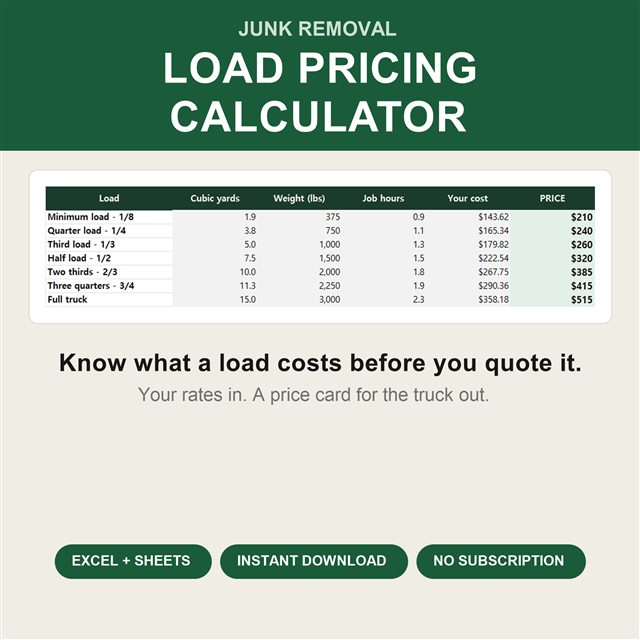
- Mixed loads: add up weight by material before you commit. The free junk removal pricing calculator does this and flags overweight loads.
For how the weight turns into a dump bill, see what a dump run costs.